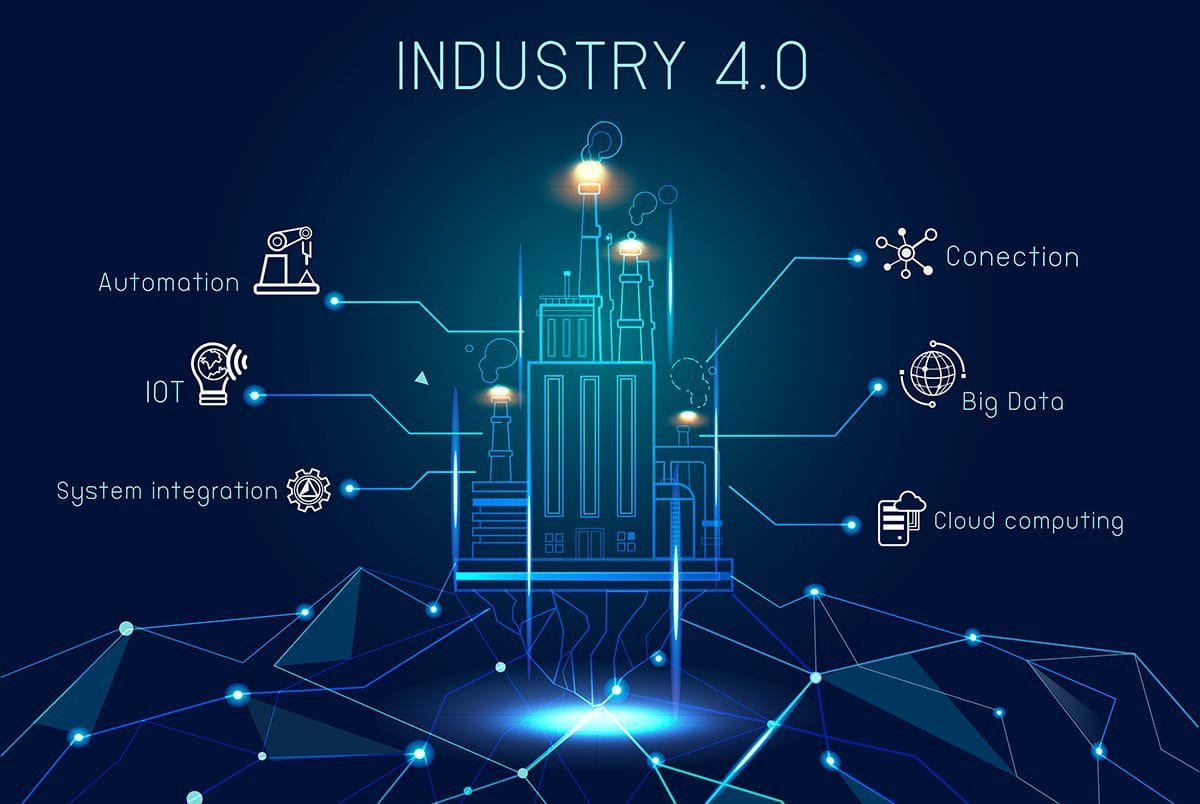
Odoo manufacturing stops where calculation from a bill of materials, a routing and a stock count stops being enough. That edge is further out than skeptics claim and nearer than "smart factory" brochures suggest. Our view is that Odoo is a sound fit for discrete production of mid-level complexity, and that a project goes better the earlier it drops the Industry 4.0 framing. A connected factory is a data problem before it is a technology problem. The module only computes what you give it.
The line, area by area
Read the table from left to right. The middle column is what the app covers. The right column is the condition under which you should price a specialist system instead of stretching Odoo.
| Area | What Odoo handles | A specialist layer starts when |
|---|---|---|
| Core production | Multi-level bills of materials, kits and by-products, manufacturing orders, work centers with routing operations, shop floor work orders, subcontracting, reordering and make-to-order routes, all feeding inventory and accounting in one database | Process manufacturing carries formal batch-record and validation requirements |
| Planning | Scheduling from lead times and work center capacity, shown in a Gantt view | You run dozens of machines with sequence-dependent setups, where the order of jobs changes the total cost |
| Shop-floor data | IoT apps connect scales, measuring instruments and printers to work orders, so readings land in the record without retyping | Machine controllers report at high frequency, or lines need real-time execution control |
| Quality and traceability | Control points at chosen operations, and lot or serial tracing from component to finished goods and back | Auditors or customers demand statistical process control, controlled specifications or certificate generation |
| Maintenance | A Maintenance app for equipment upkeep and a log of stoppages | You expect predictions, which need a failure history most plants never recorded |
Enterprise adds Quality, PLM and IoT apps, so exact scope depends on your edition and version. Check the list for the release you will run.
The planning row is the one that surprises people. Odoo's 19 release notes list a Gantt view for manufacturing orders, simplified work center capacity, generating multiple serial or lot numbers from one order, subcontracting reception through standard inventory features and new operation costing options. Read that list for what it is: progress in visibility and costing, not in autonomous planning. Odoo plans from lead times and capacity. It does not optimize a finite-capacity schedule, and customization will not turn it into a scheduler that does.
The shop-floor row has the same shape. A reading that lands in the work order without anyone retyping it removes a transcription step, and each removed step is one fewer place for a wrong number to enter. That is valuable and concrete. Millisecond telemetry and line control normally belong to a manufacturing execution system or SCADA layer, with summaries passed into Odoo. Treat Odoo as the system of record for orders, materials and cost, and let specialist tools handle the milliseconds.
The cost lands in finance either way. The cost of a manufactured product flows into inventory valuation and from there into the ledger, so a wrong bill of materials becomes a wrong margin, reported with the authority of an accounting entry. Settle the costing method and the treatment of labor and work center time before go-live. It is the one decision where the plant manager and the finance director must be in the same meeting.
Before either side of the line works
Everything the module computes comes from three inputs: the bill of materials, the times and work centers in each routing, and the stock quantities. If one is wrong, the planning suggestions are wrong and the dashboard shows the error in a clean chart.
So the first job is unglamorous. Take your fastest-moving products and compare each BoM with what the floor consumes: real scrap, real substitutions, components people take that nobody recorded. Time the routings with a stopwatch, not last year's costing sheet. This audit costs more calendar time than configuration, and a partner cannot do it alone, because the knowledge sits with your supervisors.
The same logic governs the most advertised promise. Predictive maintenance needs a history of failures: when, which part, what the cause was. The honest first step is to log every stoppage in the Maintenance app, with a cause, for a year or more, and to start analytics once that data exists. What AI can do with the data after that is in how AI improves decisions in Odoo.
Test the line on your hardest product
We implement Odoo and ERPNext, and neither is the answer to every plant. We would look beyond Odoo for high-speed lines that need real-time execution control, for process manufacturing with formal validation requirements, and for operations whose core difficulty is finite scheduling. Odoo can still carry finance, purchasing and inventory around a specialist core. The wider picture is in our assessment of Odoo's advantages and disadvantages.
Do not evaluate it on a demo database. Bring the product with the longest BoM, the most awkward routing and a substitution rule that exists only in a supervisor's head, and ask the partner to model it in Odoo with your numbers. The result will tell you more than any feature list.
If you are weighing an Odoo manufacturing project, see how we run Odoo implementation or talk to the team.